Maybe you’ve been building your resume for years and now you’re ready for something more. Maybe your career goals have changed, or you’re asking yourself big questions about your future. Whatever your reasoning, education is a powerful tool for redefining your future.
For many adults and working professionals, the idea of going back to college can be both exciting and intimidating. But if you’re an adult learner considering further education, you’re in good company: Adults in higher education make up about one-third of currently enrolled students.
Whether you’re exploring undergraduate options or preparing for graduate school, this decision can open doors to new career paths and higher earning potential.
Not sure where to start? Our breakdown below will answer all your questions: how to go back to college as an adult, how to do it successfully and how modern options like online degrees are making it more accessible than ever.
Why Adults Are Returning to College
No matter your career field, the workforce has changed dramatically. Roles evolve, industries shift and lifelong learning is now essential for success. Many adults choose to go back to school because they want:
- Career change or advancement
- New or expanded career paths
- Higher earning potential
- Specialized skills or credentials
- Personal growth and confidence
First Steps
Before jumping into applications, take some time to figure out the following:
- Clarify your goals. Identify your short- and long-term career goals. Do you need a degree to advance? Are you pivoting into a new field? Your goals will shape your program choice.
- Research flexible options. What does your life currently look like, and what do you need from a program? Many adults choose online degrees or hybrid programs that allow them to balance work, family and school.
- Evaluate your timeline and finances. What’s feasible for you right now? Adult learners often qualify for scholarships, employer tuition assistance and financial aid designed specifically for nontraditional students.
- Leverage your experience. Don’t sell yourself short! Even if it’s a total career shift, your prior experience matters. Colleges are increasingly recognizing prior learning, certifications and professional experience.
Should I Go to Grad School?
Why go to grad school? Graduate education can help you gain strategic skills, expand your network and accelerate your impact. You might consider graduate school if:
- Your desired role requires an advanced degree
- You want to increase your leadership potential
- You’re seeking specialized expertise
- You want to stand out in a competitive field
As a working professional with a lot on your plate and even more on your mind, you may feel like there’s no way you’ll be able to juggle school, too. Lots of working professionals have asked themselves this question – probably more than once – and we’re here to tell you it’s possible.
So, why go to grad school? Graduate programs can unlock new career paths, including:
- Management and executive leadership
- Specialized technical or clinical roles
- Consulting and strategic positions
- Teaching and academic leadership
Grad School Online
The best modern online grad school programs are designed specifically for working professionals. They provide so many opportunities for adult students who may still be working full-time, juggling family responsibilities or all the above. They maintain rigorous academic standards while recognizing the realities of adult life. Grad school online options offer:
- Asynchronous coursework
- Location independence
- Continued full-time employment
- Access to diverse, global networks
How to Prepare for Grad School
Preparing for graduate school looks different for adults than it does for recent undergrad students. It’s perfectly normal to feel nervous when embarking on a new academic journey. Setting yourself up for success when you start your program is essential and can really help mitigate any doubts. How to get ready:
- Refresh your academic skills. Writing, research and time management are key.
- Assess your schedule honestly. Build study time into your weekly routine.
- Clarify your motivation. What are you excited to learn? Where do you want this degree to take you? What do you want your life to look like when you reach that next career milestone? Knowing your “why” will carry you through challenging moments.
Here are few tried and true tips for graduate students with working professionals in mind:
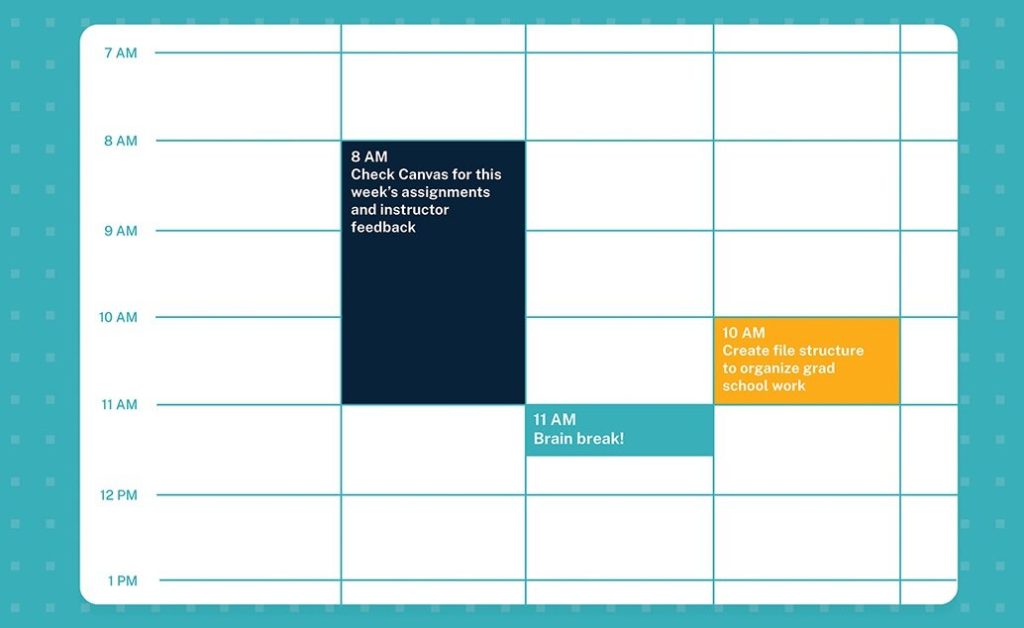
- Stay organized. Here’s a foolproof organization checklist for adults returning to grad school:
- Filing system: Before you start your classes, it’s very helpful to set up a file structure specifically for your grad school coursework on your computer. This allows you to easily find assignments you’re looking for.
- Document back-ups: Remember to save hard copies of your work to your machine – especially if you’re working on documents that live in a cloud or drive. Keep them in case you need to build a portfolio later or submit them as samples for job applications.
- Internships: If your program has an internship requirement, keep these documents in a separate folder. When you get to the end of your program, you’ll be thanking your past self for having all these documents together and already organized.
- Calendars: Figure out what tools work best for you when it comes to getting yourself organized. Do you need to write everything down? Maybe you work best with a physical planner, or maybe you need digital calendars and reminder notifications. Maybe you need several. (Whatever works!) As soon as you receive your class syllabus, set reminders for it all: due dates, payment deadlines, exams, etc. This makes it so you don’t have to worry about missing them. Once you get into a routine, you’ll feel at ease and the calendar will become your best friend. Extra tip: American College of Education’s courses all follow a similar structure, which means you can plan your calendar ahead of time, no matter the class or instructor.
- Create structure. Consistent study times reduce stress and help you balance the workload.
- Communicate early and often. Stay in touch with professors and advisors. Ask for flexibility when you need it.
- Use support systems. Lean on classmates, family and school resources. You don’t have to endure it alone!
- Protect your energy. Don’t forget to recharge. Rest is part of productivity.
While it might feel challenging to make time to do the things you love once you start your program, know that setting aside time to recharge is essential to your success. Whether it’s a bike ride or watching an episode of your favorite sitcom, setting aside time for you will make you feel better. Even something as small as making a delicious cup of coffee before you dive into your next set of readings is a simple way to treat yourself.
At the end of the day, be proud that you are taking these steps to further your education. Back-to-school jitters are normal, even for adults. Give yourself some grace and never be afraid to reach out to faculty or your advisor if you need guidance along the way.
American College of Education specializes in helping adults successfully return to school through our robust student support resources and responsive Student Services team. Learn more about our low-cost, high-quality programs.