
Career Guide: Leadership Consultant
Here’s what you need to know.
Toggle Navigation
Our Enrollment Counselors are here to answer your questions and walk you through the enrollment process.
Career Overview: Leadership Consultant
Organizations depend on strong leadership to navigate change, improve performance and support long-term growth. Leadership consultants help businesses develop effective leadership strategies, strengthen leadership skills and build workplace cultures that support organizational success. For professionals interested in management consulting, coaching or organizational development, this career path can offer opportunities across a wide range of industries and business environments.
What Is a Leadership Consultant?
A leadership consultant works with organizations to improve leadership effectiveness, strengthen leadership competencies and support employee development initiatives. These professionals identify challenges, develop training strategies and guide leaders through organizational change.
Leadership consultants often assess workplace culture, leadership performance and team dynamics to find areas of opportunity. They may design leadership development programs, provide executive coaching or help organizations create long-term strategies that align with business goals.
Some leadership consultants work for consulting firms, while others support organizations internally through corporate leadership development roles. Many also operate independent businesses that provide executive coaching, leadership training and organizational strategy services to clients across industries.
What Does a Leadership Consultant Do?
Leadership consultants enable organizations to develop leaders who can improve communication, decision-making and overall organizational performance. Their work may include executive coaching, leadership training, organizational assessments and leadership development strategies.
Core Duties and Responsibilities
Common leadership consultant responsibilities include:
- Assessing organizational leadership needs and workplace challenges
- Designing and delivering leadership development programs
- Providing executive coaching and mentoring for managers and senior leaders
- Evaluating leadership competencies and employee performance
- Supporting organizational change and transformation initiatives
- Collaborating with HR professionals and executive teams
- Measuring the effectiveness of leadership initiatives and training programs
Work Environment Variations
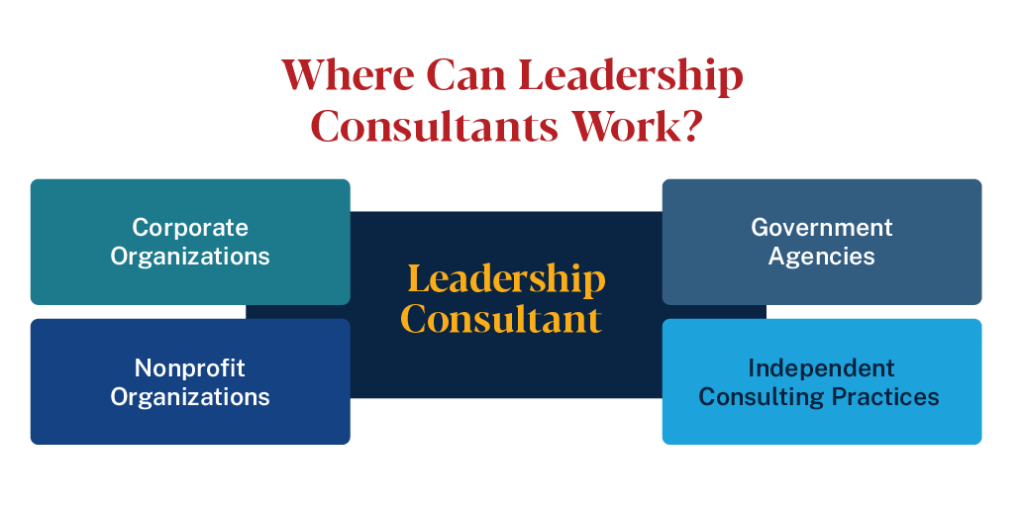
Leadership development consulting services are often provided in a variety of settings, including:
- Consulting firms
- Corporate organizations
- Nonprofit organizations
- Government agencies
- Independent consulting practices
Skills & Traits That Make a Successful Leadership Consultant
Successful leadership consultants combine strong interpersonal skills with business knowledge and strategic thinking. Because they work closely with executives, managers and HR teams, they must communicate clearly and adapt to different industries, workplace cultures and leadership styles.
Essential Soft Skills
- Strong leadership and interpersonal skills
- Communication and presentation skills
- Emotional intelligence and empathy
- Critical thinking and problem-solving
- Adaptability in diverse business environments
Important Technical Skills
- Knowledge of leadership development frameworks
- Organizational behavior and management principles
- Data analysis and performance measurement
- Training and facilitation techniques
- Business strategy and operations understanding
How These Skills Apply on the Job
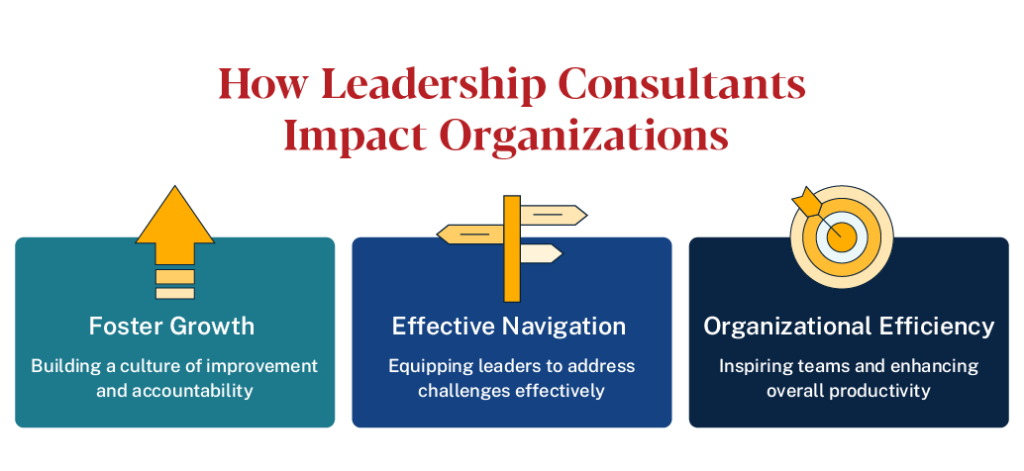
Leadership consultants use these skills to coach leaders, design impactful development programs and improve organizational effectiveness. In many cases, they help strengthen workplace culture, improve communication and support long-term business goals.
Leadership Consultant Education Requirements
There’s no single educational path for becoming a leadership consultant, but most professionals begin with education in business, leadership or organizational development.
Minimum Education Requirements
Many employers prefer candidates with a bachelor’s degree in business, psychology, human resources or a related field. That’s where students develop leadership, communication and management skills that apply directly to consulting work.
Preferred Education Pathways
Some professionals pursue degrees in business administration, organizational leadership or human resources to strengthen their expertise in leadership development and workplace strategy. Graduate education in leadership or organizational behavior may help professionals qualify for advanced consulting or leadership roles.
Certifications and Training Options
Leadership consultants may pursue certifications and continuing education in areas such as:
- Executive coaching
- Leadership coaching
- Professional development
- Management consulting
- Organizational development
How to Become a Leadership Consultant
Professionals interested in becoming leadership consultants often build experience in leadership, management and organizational development before transitioning into consulting roles.
- Earn a Relevant Degree
Many leadership consultants begin by earning a degree in business, psychology, leadership or a related field. Coursework often focuses on communication, analytical thinking and leadership skills that support consulting work.
- Gain Experience in Leadership or Management
Practical experience is an important part of developing consulting expertise. Many professionals start in management, HR, training and development, or team leadership roles before moving into consulting positions.
- Develop Consulting and Coaching Skills
Leadership consultants often build experience in executive coaching, facilitation and professional development. Working with teams and organizational leaders helps professionals understand how to identify leadership challenges and improve performance across different workplace settings.
- Transition Into Consulting Roles
Some professionals join a consulting firm, while others launch independent consulting businesses that focus on leadership training, organizational strategy or executive coaching services.
- Optional: Advance With Graduate Education
Graduate education like a Master in Business Administration (MBA) or a master’s degree in organizational leadership may help professionals strengthen their business knowledge and prepare for advanced consulting or leadership roles.
Day-in-the-Life & Real-World Scenarios
A Typical Workday
A typical workday may include:
- Meeting with organizational leaders
- Conducting training sessions or workshops
- Analyzing leadership performance data
Real-World Examples
A leadership consultant might help an executive team navigate organizational change after a company merger or design a leadership development program for a rapidly growing business. They may also support succession planning and leadership transitions.
What Success Looks Like in the Role
Success in this field includes supporting communication improvements and leadership development initiatives aligned with organizational goals.
Leadership Consultant Salary & Job Outlook
Leadership consultant salary levels can vary based on industry, experience, education and client demand. Professionals with expertise in executive coaching, organizational strategy or management consulting may earn higher salaries depending on their specialization and client base.
Demand for management analysts is expected to grow 9% between 2024 and 2034, which is much faster than the average for all occupations, as organizations invest in leadership development, workforce strategy and organizational effectiveness.* Evolving business environments and changing workforce expectations continue to increase the importance of leadership development and professional coaching services.


FAQs
Do leadership consultants need prior management experience?
Many leadership consultants have experience in management, HR, or training and development roles. Leadership experience can help consultants understand organizational challenges, team dynamics and workplace communication.
Can leadership consultants work independently?
Yes. Some professionals operate independent businesses that provide executive coaching, leadership training and organizational strategy services to clients.
What industries hire leadership consultants?
Leadership consultants work across industries including healthcare, education, technology, government, nonprofit organizations and corporate settings.
How do leadership consultants measure success?
Leadership consultants often measure success through improved communication, employee engagement, organizational performance and leadership development outcomes.
Advance Your Business Career
If you are interested in building a career that helps organizations strengthen leadership, improve performance and navigate change, developing your education is an important first step. Programs at American College of Education (ACE) can help you build the leadership, communication and strategic thinking skills that support careers in leadership consulting and organizational development. Invest in your future today and pursue a career aligned with your goals.