
Career Guide: Logistics Manager
Here’s what you need to know.
Toggle Navigation
Our Enrollment Counselors are here to answer your questions and walk you through the enrollment process.
Career Overview: Logistics Manager
From inventory control and transportation scheduling to warehouse operations and supply chain planning, logistics managers help organizations keep products moving efficiently. These professionals oversee logistics operations that support manufacturing, retail, healthcare and e-commerce environments where timing, coordination and cost control directly affect performance. As supply chains become more complex, employers continue seeking professionals with strong leadership, project management and operational planning skills.
What Is Logistics Management?
Logistics management involves coordinating the movement of goods, materials and information throughout the supply chain. It includes overseeing transportation, inventory levels, warehousing and distribution activities to help products move efficiently from suppliers to customers.
A logistics manager helps keep supply chain processes organized, efficient and responsive to operational demands. These professionals oversee logistics operations that affect inventory control, shipping timelines and day-to-day coordination across warehouses, vendors and transportation providers. In many organizations, logistics managers also analyze data, monitor inventory levels and identify opportunities to reduce costs and improve efficiency.
Logistics management supports operations across industries including manufacturing, retail, healthcare and e-commerce. Professionals in this field may work in distribution centers, corporate supply chain departments, transportation companies or warehouse environments.
What Does a Logistics Manager Do?
A logistics manager oversees the people, systems and workflows that keep products moving through the supply chain.
Core Duties and Responsibilities
A logistics manager’s job description involves coordinating inventory, transportation and warehouse activities to keep supply chain operations running efficiently. Common responsibilities include:
- Overseeing logistics operations and supply chain processes
- Managing inventory control systems and levels
- Coordinating warehouse operations and transportation schedules
- Monitoring warehouse management systems and logistics software
- Analyzing data to improve efficiency and reduce costs
- Collaborating with vendors, suppliers and internal departments
- Leading teams and supporting project management initiatives
Work Environments
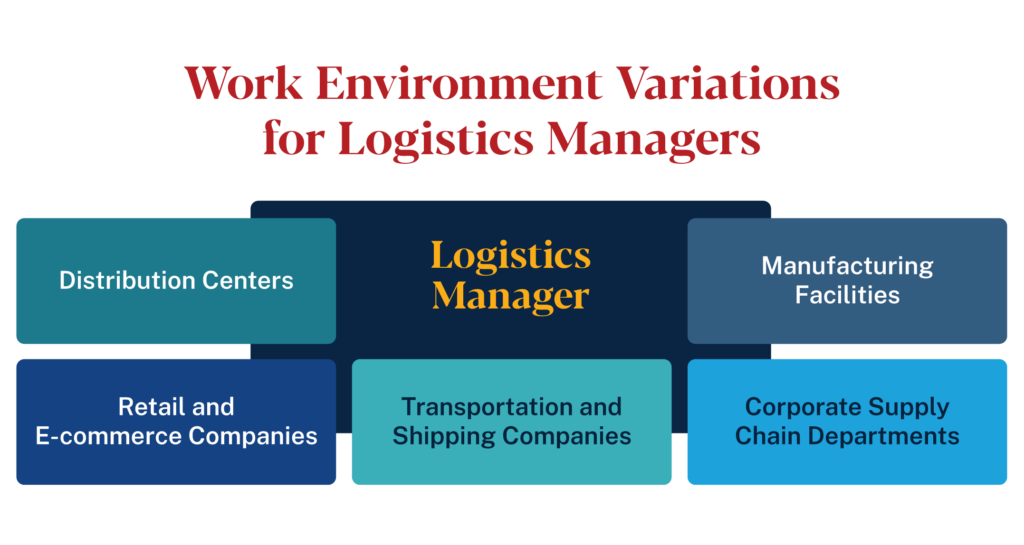
Logistics managers work across a range of industries and operational environments, including:
- Distribution centers
- Manufacturing facilities
- Retail and e-commerce businesses
- Transportation and shipping companies
- Corporate supply chain departments
Skills & Traits That Make a Successful Logistics Manager
Successful logistics managers combine operational knowledge with strong leadership, communication and problem-solving skills.
Essential Soft Skills
Key soft skills for logistics managers include:
- Leadership and team management
- Communication and collaboration
- Problem-solving and critical thinking
- Time management and organization
- Adaptability in fast-paced environments
Important Technical Skills
Important technical skills for logistics managers include:
- Knowledge of supply chain and logistics operations
- Inventory management and forecasting
- Warehouse management systems (WMS)
- Data analysis and reporting
- Project management and operations planning
How These Skills Apply on the Job
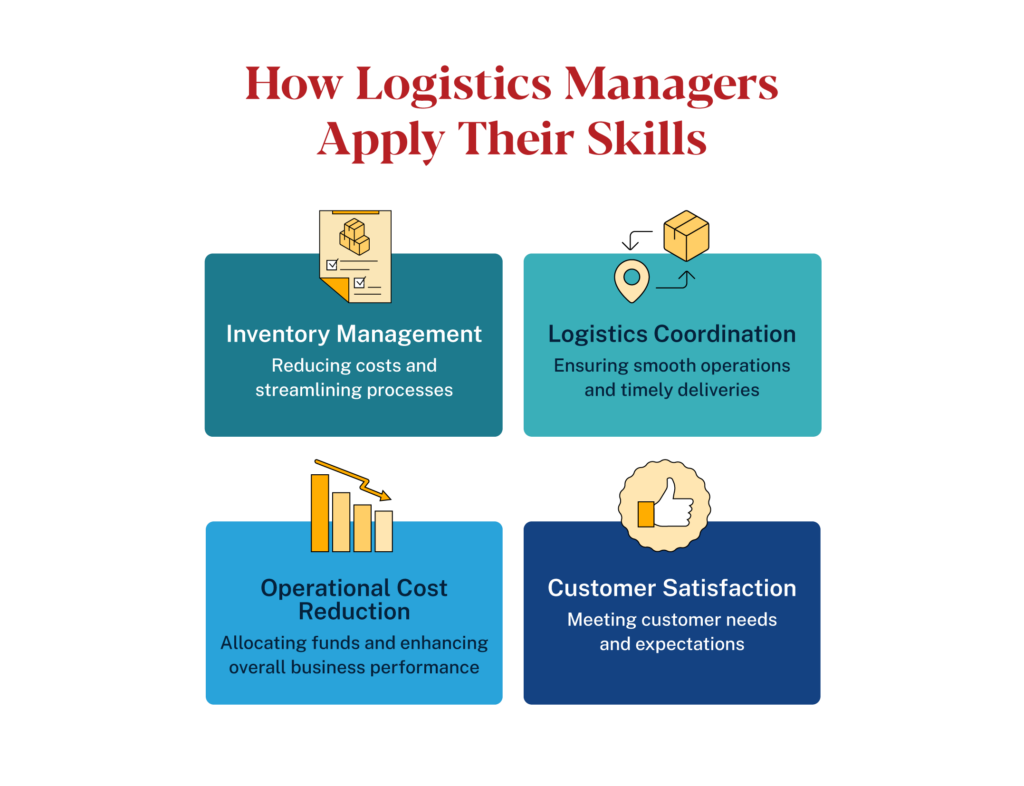
In day-to-day logistics operations, these skills help managers coordinate workflows, maintain inventory accuracy and respond to transportation or shipping delays more effectively. Logistics managers may use reporting tools to monitor inventory levels, improve warehouse efficiency and identify operational issues before they affect delivery timelines or customer satisfaction.
Logistics Manager Education Requirements
Most logistics manager positions require a combination of education, operational experience and leadership skills. Many employers prefer candidates with formal training in logistics, business administration or supply chain management.
Minimum Education Requirements
A bachelor’s degree is commonly required for logistics manager positions. Common fields of study include business administration, logistics, supply chain management and operations management. These programs can help students build foundational knowledge in inventory control, transportation systems and supply chain operations.
Preferred Education Pathways
Many aspiring logistics managers pursue degree programs that combine logistics, leadership and business analytics. Coursework in project management, business operations, logistics technology and supply chain planning can help students prepare for logistics environments that rely on efficiency, coordination and data-driven decision-making.
Certifications and Training Options
Some logistics professionals strengthen their qualifications with certifications and continuing education focused on supply chain management and operations. Certifications in logistics, transportation or project management may support career advancement and help managers stay current with evolving technology and industry practices.
How to Become a Logistics Manager
Becoming a logistics manager usually requires a combination of education, operational experience and leadership skills.
- Earn a Relevant Degree
Many logistics managers begin with a bachelor’s degree in business administration, logistics, supply chain management or a related field. Coursework in operations planning, analytics and inventory management can help build foundational industry knowledge.
- Gain Experience in Logistics or Operations
Entry-level roles in warehousing, transportation or shipping coordination can help professionals build hands-on experience with logistics operations, inventory control and supply chain workflows.
- Develop Leadership and Technical Skills
As they gain experience, logistics professionals often build expertise in logistics software, warehouse management systems and operational planning tools. Supervisory and project management experience can also help prepare candidates for leadership responsibilities.
- Advance Into Logistics Management Roles
With experience in operations and team leadership, logistics professionals can move into management roles overseeing transportation planning, inventory systems and warehouse operations.
- Optional: Advance With Graduate Education
Some logistics professionals pursue graduate education such as an MBA or a leadership-focused master’s degree to prepare for senior operations or supply chain leadership roles.
Day-in-the-Life & Real-World Scenarios
Logistics management often involves coordinating inventory, transportation and warehouse operations across fast-moving supply chains.
A Typical Workday
A logistics manager’s day may include reviewing reports, monitoring inventory levels and coordinating transportation schedules. Many also work closely with warehouse teams, suppliers and operations leaders to resolve delays, improve workflows and keep shipments moving efficiently.
Real-World Examples
In a distribution center, a logistics manager might identify warehouse bottlenecks that are slowing shipments and implementing process improvements to reduce delays. During periods of increased demand, they may also adjust transportation schedules or inventory planning strategies to keep deliveries on track.
What Success Looks Like in the Role
Successful logistics managers help organizations maintain efficient supply chain operations, improve inventory accuracy and reduce operational costs. Strong performance in the role also includes supporting timely deliveries, minimizing disruptions and keeping logistics workflows running smoothly.
Logistics Manager Salary & Job Outlook
Demand for logistics and supply chain professionals continues to grow as organizations expand distribution networks and invest in operational efficiency.


FAQs
What industries hire logistics managers?
Logistics managers work in industries like manufacturing, healthcare, retail, e-commerce, transportation and government operations.
Do logistics managers work in warehouses or offices?
Many logistics managers split their time between office environments and operational facilities like warehouses or distribution centers, depending on the organization and the role.
What software do logistics managers use?
Logistics managers often use warehouse management systems, inventory tracking software, transportation management platforms and operational reporting tools.
Advance Your Business Career
The next level of your career is ready when you are. All you have to do is apply now!