
Career Guide: Occupational Therapist
Here’s what you need to know.
Toggle Navigation
Our Enrollment Counselors are here to answer your questions and walk you through the enrollment process.
Career Overview: Occupational Therapist
Occupational therapists help patients improve independence, mobility and daily functioning through rehabilitation-focused care. They work in hospitals, schools, rehabilitation centers and skilled nursing facilities where they help people regain skills needed for everyday life and work.
What Is an Occupational Therapist?
An occupational therapist (OT) is a licensed healthcare professional who helps patients develop, recover and maintain skills needed for daily activities and work. The profession focuses on helping patients navigate physical, cognitive, emotional and developmental challenges.
Occupational therapists evaluate patient needs and create individualized treatment plans that support mobility, coordination, communication and daily functioning. Treatment may include exercises, adaptive strategies and assistive technology.
They work with children, adults and older adults in settings such as hospitals, schools, rehabilitation centers, outpatient clinics and skilled nursing facilities.
What Does an Occupational Therapist Do?
Occupational therapists help patients improve their ability to complete everyday activities safely and independently. Responsibilities vary by patient population and work setting.
Core Duties and Responsibilities
Common responsibilities include:
- Evaluating patient needs, limitations and functional abilities
- Creating individualized treatment plans
- Helping patients improve motor, cognitive and daily living skills
- Teaching patients how to use adaptive equipment and assistive devices
- Monitoring patient progress and adjusting treatment plans
- Collaborating with healthcare professionals including physical therapists, nurses and physicians
- Educating patients and families on rehabilitation and long-term care strategies
An occupational therapy assistant may also assist with therapy sessions under the supervision of a licensed occupational therapist.
Work Environments
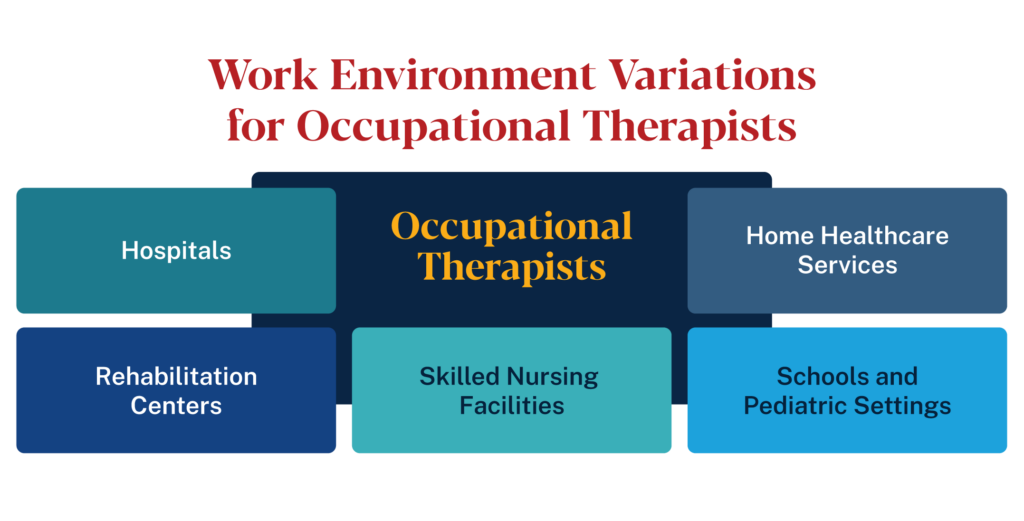
Occupational therapists work in healthcare and educational settings, including:
- Hospitals
- Rehabilitation centers
- Skilled nursing facilities
- Schools and pediatric therapy settings
- Home healthcare agencies
- Outpatient rehabilitation clinics
Skills & Traits That Make a Successful Occupational Therapist
Occupational therapists rely on both clinical knowledge and interpersonal skills.
Essential Soft Skills
- Empathy and compassion
- Communication and interpersonal skills
- Patience and adaptability
- Critical thinking and problem-solving
- Attention to detail
Important Technical Skills
- Knowledge of occupational therapy techniques
- Understanding of anatomy and physiology
- Treatment planning and patient assessment
- Use of therapy tools and adaptive equipment
- Documentation and patient record management
How These Skills Apply on the Job
These skills help occupational therapists create effective treatment plans and support patients throughout rehabilitation. Communication and adaptability also help therapists track progress and adjust care strategies as needed.
Occupational Therapist Education Requirements
People researching how to become an occupational therapist should understand that the profession requires undergraduate education, graduate training and state licensure.
Minimum Education Requirements
Most occupational therapists begin by earning a bachelor’s degree in a related field such as health sciences, biology, psychology, nursing or healthcare administration.
Foundational coursework often includes:
- Anatomy and physiology
- Psychology
- Biology
- Human development
- Healthcare systems
Required Graduate Education
Occupational therapists must complete a master’s degree through accredited occupational therapy programs approved by the Accreditation Council for Occupational Therapy Education (ACOTE), which sets accreditation standards for occupational therapy education.
These programs include classroom instruction, fieldwork and supervised clinical experience.
Certifications and Licensure
To practice professionally, occupational therapists must:
- Pass the NBCOT exam administered by the National Board for Certification in Occupational Therapy
- Meet state licensure requirements
- Complete continuing education requirements for license renewal
How to Become an Occupational Therapist
- Earn a Bachelor’s Degree
Complete a bachelor’s degree in health sciences, nursing, psychology, biology, healthcare administration or a related field.
- Complete an Accredited Occupational Therapy Program
Enroll in an ACOTE-accredited occupational therapy master’s or doctoral program that includes classroom learning and supervised clinical experience.
- Gain Clinical Experience
Complete required fieldwork placements and hands-on clinical training in healthcare or rehabilitation settings.
- Pass the NBCOT Exam and Obtain Licensure
Graduates must pass the NBCOT exam and meet state licensing requirements before practicing professionally.
- Optional: Advance With Specialization or Doctoral Education
Some occupational therapists pursue specialized certifications in pediatrics, gerontology, mental health or neurological rehabilitation. Others complete an Occupational Therapy Doctorate (OTD) for leadership, education or advanced clinical roles.
Day-in-the-Life & Real-World Scenarios
A Typical Workday
A typical workday may include evaluating patients, updating treatment plans, leading therapy sessions and collaborating with healthcare teams. Occupational therapists also help patients improve the skills needed for daily routines, work and independent living.
Real-World Examples
Occupational therapists work with a wide range of patient populations and rehabilitation needs. They may help a patient regain independence after a stroke by restoring mobility and daily living skills or work with a child experiencing developmental challenges related to sensory processing, motor coordination and classroom participation.
What Success Looks Like in the Role
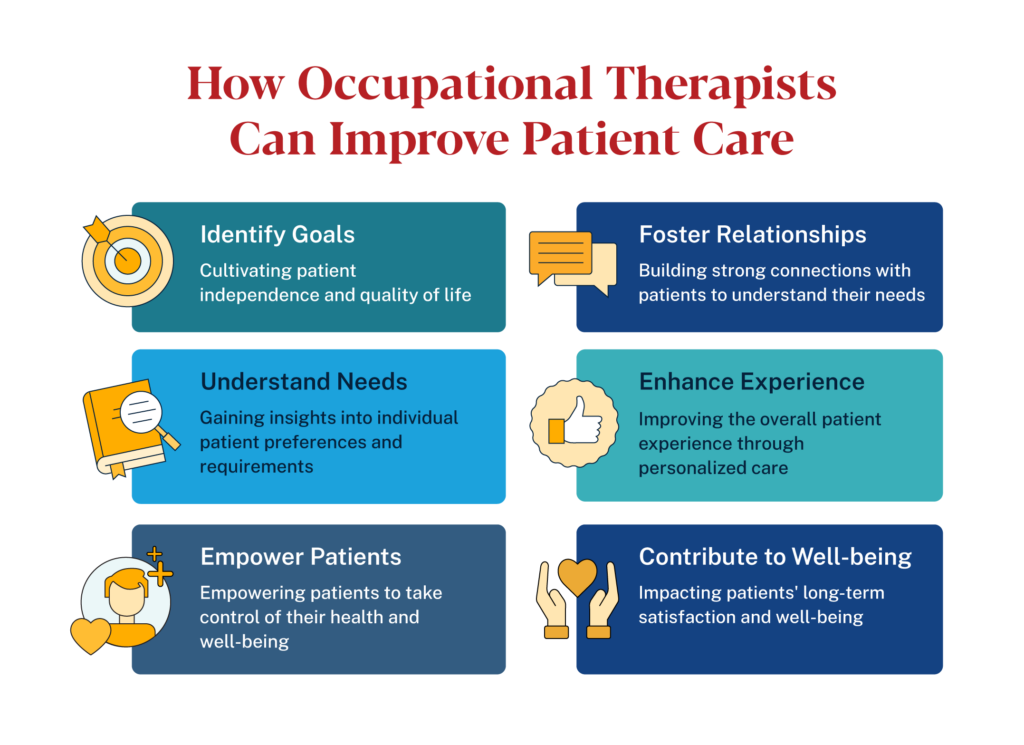
Success as an occupational therapist is often measured through improved patient independence, stronger rehabilitation outcomes and meaningful long-term patient relationships.
Occupational Therapist Salary & Job Outlook
Occupational therapists continue to see strong demand across healthcare and rehabilitation settings.


FAQs
What is the difference between an occupational therapist and a physical therapist?
Occupational therapists help patients improve daily living and functional skills, while physical therapists primarily focus on movement, strength, mobility and pain reduction.
How long does it take to become an occupational therapist?
Becoming an occupational therapist typically takes six to seven years, including undergraduate education, graduate training and supervised clinical experience.
Do occupational therapists work with children or adults?
They work with patients of all ages, including children, adults and older adults in healthcare, school and rehabilitation settings.
Can occupational therapists specialize in certain areas?
Yes. They may specialize in areas such as pediatrics, mental health, gerontology, neurological rehabilitation and hand therapy.
Your Career in Healthcare Can Begin Today
At ACE, flexible coursework and career-focused programs are designed to support working professionals and aspiring healthcare leaders. From micro-credentials to advanced degrees, these programs can help you expand your expertise and prepare for roles that promote health and improve lives. Take the next step in your career today.