
Career Guide: Supply Chain Manager
Here’s what you need to know.
Toggle Navigation
Our Enrollment Counselors are here to answer your questions and walk you through the enrollment process.
Supply Chain Manager Career Overview
It takes massive coordination for store shelves to stay stocked or online orders to move smoothly from warehouses to customers. At the heart of these efforts is a supply chain team that’s fully prepared to orchestrate each step behind the scenes. From sourcing materials to managing inventory and shipping logistics, supply chain managers play an essential role in keeping businesses running efficiently in an increasingly connected global economy.
For individuals interested in business operations, logistics and problem-solving, a supply chain management career can offer strong long-term opportunities across many industries. Learn what supply chain managers do, the education and experience often required for the role, and what to expect from this fast-moving career path.
What Is Supply Chain Management?
Supply chain management is the process of coordinating the sourcing, production, storage and movement of goods from suppliers to customers. Businesses rely on supply chain operations to manage inventory, maintain product availability and support efficient business operations across local and global markets.
Supply chain managers oversee many parts of this process, including procurement, inventory management, transportation logistics and distribution planning. Their work helps businesses reduce delays, improve efficiency and maintain customer satisfaction.
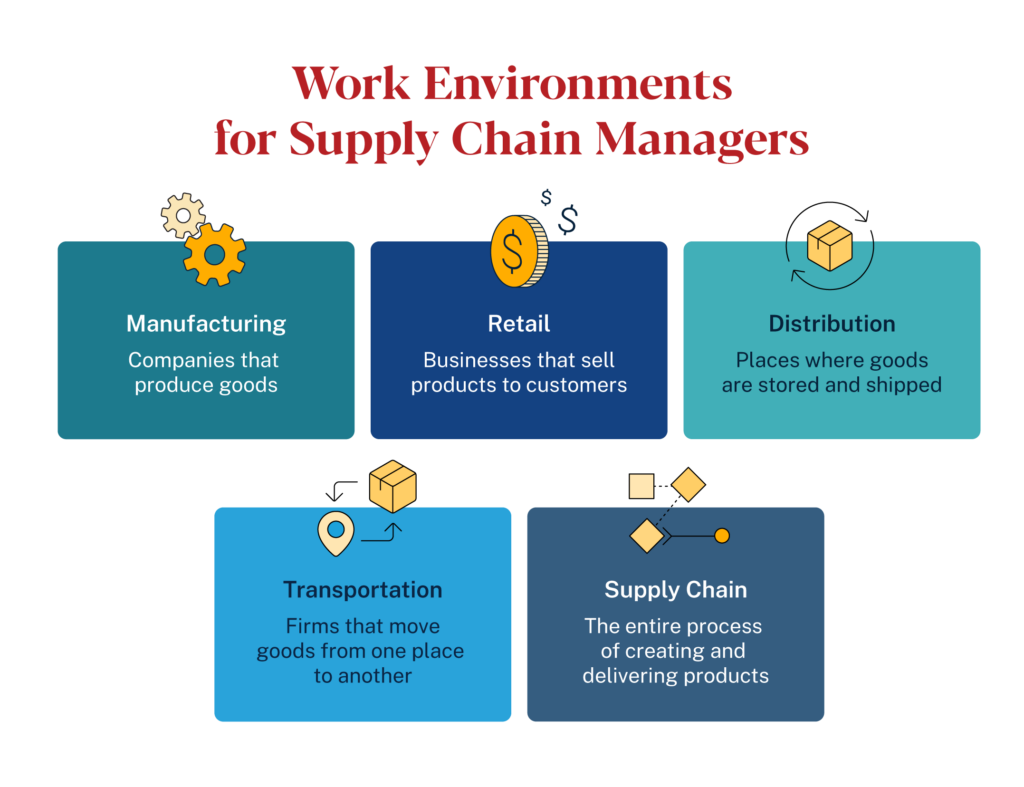
Because supply chain processes affect nearly every industry, professionals in this field may work in environments such as:
- Manufacturing companies
- Distribution centers and warehouses
- Retail and e-commerce organizations
- Transportation and logistics firms
- Global supply chain networks
What Does a Supply Chain Manager Do?
Supply chain managers orchestrate the movement of goods, coordinate logistics operations and help businesses maintain efficient supply chain processes. Their responsibilities often involve balancing costs, inventory levels, transportation timelines and operational performance.
Core Duties and Responsibilities
Supply chain managers work with vendors, transportation providers and internal departments to keep products moving efficiently through the supply chain. For example, a supply chain manager for a retail company may monitor inventory shortages, coordinate incoming shipments and adjust logistics schedules to help avoid delays during peak shopping seasons. Depending on the industry, responsibilities commonly include:
- Managing supply chain operations and logistics processes
- Overseeing inventory management and quality control
- Coordinating the movement of goods across suppliers and distribution centers
- Developing supply chain strategies and operational improvements
- Reviewing data analytics reports and operational performance
- Collaborating with vendors, suppliers and transportation teams
- Supporting cost reduction and operational efficiency initiatives
Work Environment Variations
Supply chain managers can work across several industries depending on your interests and experience. Each setting may involve different operational priorities but all rely on communication, organization and strategic decision-making. While some professionals focus on warehousing and transportation, others oversee procurement, manufacturing or global logistics coordination.
Common work environments include:
- Manufacturing companies
- Retail and e-commerce organizations
- Distribution centers and warehouses
- Transportation and logistics firms
- Global supply chain operations
Skills & Traits That Make a Successful Supply Chain Manager
Supply chain managers are at the center of complex operations involving inventory, logistics, vendor relationships and transportation timelines. To thrive in this field, you must have both strong leadership skills and technical business knowledge.
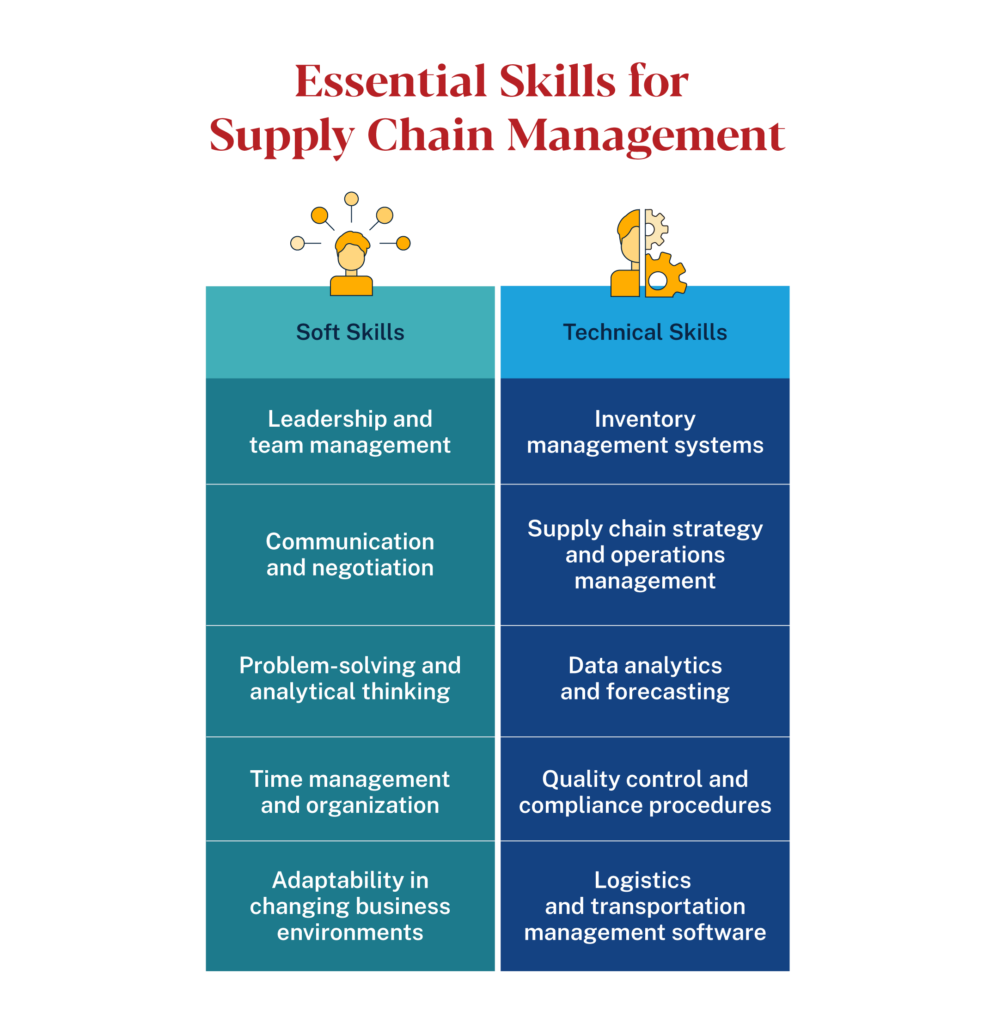
Essential Soft Skills
Supply chain operations require careful coordination across multiple departments and with a wide range of vendors. This means that communication and adaptability are especially important. For instance, a manager responding to a shipping disruption may need to communicate with suppliers, adjust delivery schedules and help internal teams respond quickly to operational changes.
Successful professionals often develop skills such as:
- Leadership and team management
- Communication and negotiation
- Problem-solving and analytical thinking
- Time management and organization
- Adaptability in changing business environments
Important Technical Skills
Alongside soft skills, supply chain managers often rely on technology, analytics and operations systems to manage inventory and logistics performance. Important technical skills may include:
- Inventory management systems
- Supply chain strategy and operations management
- Data analytics and forecasting
- Quality control and compliance procedures
- Logistics and transportation management software
How These Skills Apply on the Job
In day-to-day operations, supply chain managers use communication, analytics and logistics planning to help businesses improve efficiency and reduce disruptions. These skills support inventory accuracy, operational performance and coordination across global supply chain networks.
Supply Chain Manager Education Requirements
If you’re currently exploring how to become a supply chain manager, you may have discovered the journey often begins with a degree focused on business, logistics or operations management.
Minimum Education Requirements
Most supply chain managers hold a bachelor’s degree in business administration, logistics, supply chain management or a related field. Coursework often includes operations management, procurement, inventory systems and business analytics.
Preferred Education Pathways
Some professionals pursue specialized coursework or advanced education to strengthen leadership and operational expertise. Preferred pathways may include:
- Degree programs focused on operations management and logistics
- Coursework in analytics, procurement and business strategy
- Training related to transportation and global supply chain operations
Certifications and Training Options
Professional certifications can help supply chain managers strengthen technical knowledge and demonstrate expertise in logistics and operations management. Common options may include supply chain certifications, operations management training and continuing education focused on global logistics technologies.
How to Become a Supply Chain Manager
- Earn a Relevant Degree
The first step toward a supply chain management career is typically earning a degree in business administration, logistics, supply chain management or a related field. These programs help you build knowledge in operations management, inventory systems and business strategy.
- Gain Experience in Operations or Logistics
Supply chain managers often begin their careers in entry-level logistics, warehousing or procurement roles before advancing into management positions. Hands-on experience with inventory management, shipping coordination and supply chain processes can help build practical operational skills.
- Develop Technical and Leadership Skills
As you gain experience, you may develop expertise in data analytics, logistics software and operations systems. Leadership experience, project coordination and communication skills can also support advancement into supervisory roles.
- Advance Into Supply Chain Management Roles
After building operational experience, you can pursue supply chain manager or logistics leadership positions in manufacturing, retail, transportation or distribution environments. These roles often involve overseeing teams, managing vendors and improving operational performance.
- Optional: Advance With Graduate Education
Some supply chain managers elect to pursue graduate education. This can include degrees such as an MBA or leadership-focused master’s degree, which can help refine business strategy, management and organizational leadership skills.
Day-in-the-Life & Real-World Scenarios
Supply chain managers often work in fast-moving business environments where delays, inventory shortages and transportation issues can quickly affect operations. How they respond to these challenges can be the determining factor in helping businesses maintain productivity and customer satisfaction.
A Typical Workday
A typical workday may involve reviewing inventory reports, monitoring shipping schedules, and coordinating with suppliers or warehouse teams. Supply chain managers also spend time analyzing operational performance, managing timelines and addressing logistics challenges as they arise.
Real-World Examples
A supply chain manager may help reroute shipments during transportation delays or adjust inventory levels during periods of increased demand. In global supply chain environments, they may also coordinate with international suppliers and logistics providers to help avoid disruptions.
What Success Looks Like in the Role
Successful supply chain managers help businesses maintain efficient operations, reduce delays and improve inventory accuracy. Strong communication, strategic planning and operational oversight can contribute to better customer satisfaction and long-term business performance.
Supply Chain Management Salary & Job Outlook
Supply chain management job outlook and salary potential is generally reflected in the broader transportation, storage and distribution manager category and can vary depending on industry, experience, education and operational responsibilities.


FAQs
What industries employ supply chain managers?
Supply chain managers work in industries such as manufacturing, retail, transportation, healthcare, logistics and e-commerce. Many organizations rely on supply chain operations to manage inventory, shipping and distribution processes.
Is supply chain management a good long-term career?
For individuals interested in logistics, business operations and problem-solving, supply chain management can offer strong long-term career opportunities across several industries.
What software tools do supply chain managers use?
Supply chain managers may use inventory management systems, forecasting tools, transportation software and data analytics platforms to monitor operations and improve efficiency.
Can supply chain managers work internationally?
Yes. Many professionals work within global supply chain networks that involve international suppliers, shipping providers and distribution operations.
Shape Your Future in Business Operations
Supply chain managers help businesses coordinate logistics, manage inventory and keep products moving efficiently through complex supply chain networks. Take on an essential role in a wide range of industries with American College of Education (ACE) by your side.
Our affordable business programs are designed to optimize your professional growth and support your long-term career goals. Get started with ACE today.