
Career Guide: Trauma Nurse
Here’s what you need to know.
Toggle Navigation
Our Enrollment Counselors are here to answer your questions and walk you through the enrollment process.
Career Overview: Trauma Nurse
When a patient arrives at an emergency center following a serious accident or traumatic injury, every second matters. In those critical moments, trauma nurses are often among the first healthcare professionals to assess injuries, stabilize patients and coordinate urgent care. Their ability to stay calm under pressure can help save lives and support patients during some of the most difficult moments they may ever face.
For nurses who thrive in fast-paced environments and want to make a meaningful difference, trauma nursing can offer a challenging and rewarding career path. From emergency rooms to intensive care units, these healthcare experts play an essential role in helping care for patients with severe or life-threatening injuries while working alongside physicians, surgeons and emergency response teams. Learn key information about this career path, what it takes to get there and more.
What Is a Trauma Nurse?
A trauma nurse is a registered nurse (RN) who specializes in caring for patients experiencing severe injuries, medical emergencies or other critical conditions that require immediate attention. These professionals are trained to respond quickly in high-pressure situations and provide trauma care that helps stabilize patients during the earliest and most critical stages of treatment.
Trauma nurses often work with patients who have experienced serious accidents, burns, falls, violent injuries or other medical emergencies. Their role focuses on rapid assessment, emergency intervention and ongoing monitoring while coordinating with trauma care teams to determine the next steps in treatment.
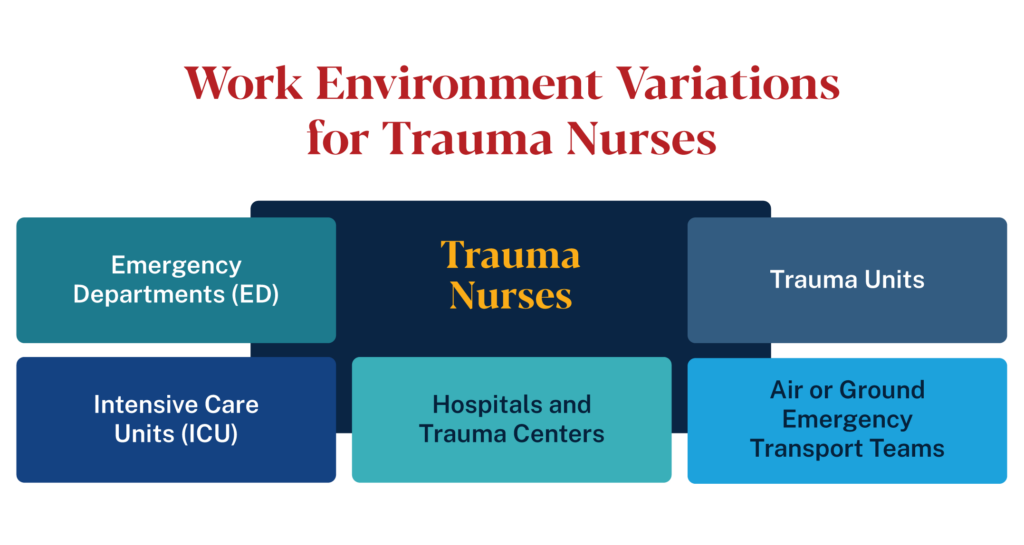
Because trauma nurses work in urgent care settings, they are commonly found in:
- Emergency departments where patients require immediate medical attention
- Trauma units that specialize in treating severe injuries and coordinating emergency surgical care
- Intensive care units (ICUs) where critically injured patients may need close monitoring and advanced life support
- Hospitals and designated trauma centers that handle high volumes of emergency and critical care cases
What Do Trauma Nurses Do?
A trauma nurse career involves managing a wide range of responsibilities focused on rapid response, patient stabilization and urgent treatment. Because every emergency situation is different, no two shifts are exactly alike. One moment may involve helping stabilize a patient after a major accident, while the next could require coordinating emergency procedures for someone experiencing life-threatening injuries.
Core Duties and Responsibilities
Trauma nurses often balance several urgent tasks at once while communicating with physicians, surgeons and other healthcare personnel in emergency rooms. Their ability to make quick decisions while maintaining patient-centered care is an important part of effective trauma treatment. Common trauma nurse job responsibilities may include:
- Assessing and triaging patients with life-threatening injuries to determine treatment priorities
- Stabilizing patients during emergency situations before additional procedures or surgery
- Administering emergency medication, blood products and other treatments as needed
- Monitoring vital signs and patient conditions for sudden changes
- Assisting physicians during emergency procedures and trauma interventions
- Coordinating care with multidisciplinary healthcare teams
- Providing emotional support and communication for patients and their families
For example, a trauma nurse working in an emergency department may help treat multiple patients involved in a highway collision while also preparing equipment, monitoring patient responses and updating physicians in real time.
Work Environments Variations
Trauma nurses can work in several healthcare environments depending on their experience, certifications and career goals. While many work in hospitals, others may support emergency transport or specialized trauma programs. Common work settings include:
- Emergency rooms and departments
- Trauma units and centers
- Intensive care units
- Surgical recovery and critical care departments
- Air or ground emergency transport teams
Each environment presents different challenges, but all require strong clinical judgment, communication and teamwork.
Skills & Traits That Make a Successful Trauma Nurse
Trauma nursing requires a combination of technical expertise and emotional resilience. Because trauma nurses regularly work in high-stress situations, they must be prepared to think quickly, communicate clearly and deliver effective care under pressure.
Essential Soft Skills
Strong soft skills can help trauma nurses support patients while also collaborating effectively with healthcare teams. In fast-moving emergency situations, these qualities often become just as important as clinical knowledge. Successful trauma nurses often demonstrate:
- The ability to stay calm and focused during high-pressure emergencies
- Strong communication and teamwork skills when coordinating patient care
- Quick decision-making during rapidly changing situations
- Emotional resilience when caring for critically injured patients
- Compassion and patient-centered care
Because trauma care environments can be emotionally demanding, many nurses also prioritize strategies that support mental wellness and prevent burnout. Learning how to recognize and manage compassion fatigue can help nurses maintain long-term success in the profession.
Important Technical Skills
Alongside soft skills, trauma nurses must develop advanced clinical abilities that help them respond rapidly during emergencies. These technical skills support patient safety and efficient trauma care delivery. Important technical skills may include:
- Advanced clinical nursing skills and patient assessment techniques
- Knowledge of trauma care protocols and emergency response procedures
- Life-saving interventions such as CPR and airway management
- Operation of medical equipment and patient monitoring systems
- Safe administration of emergency medication and treatments
How These Skills Apply on the Job
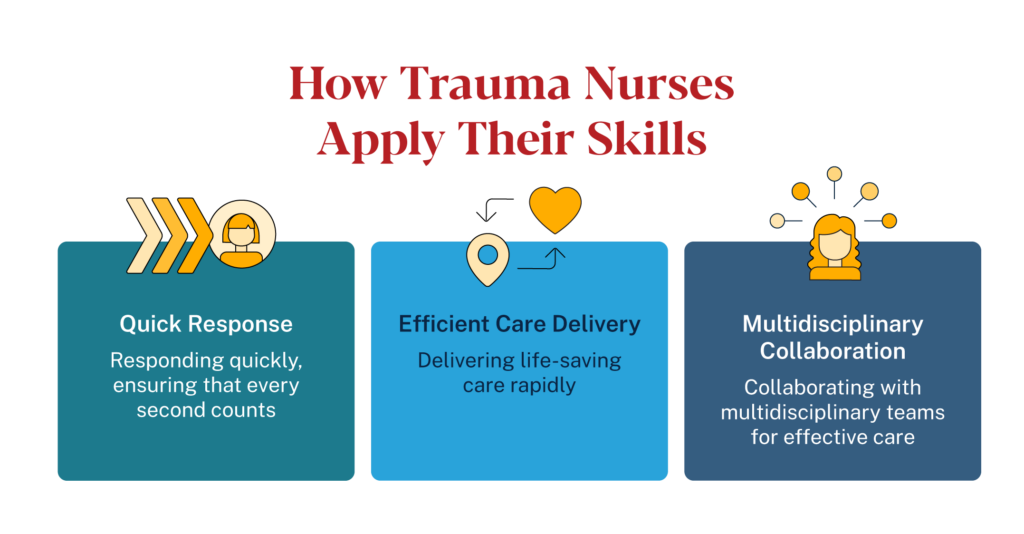
In real-world medical emergencies, trauma nurses often need to combine technical expertise with calm decision-making. A nurse treating a patient after a severe fall, for instance, may need to monitor vital signs, communicate with surgeons and reassure family members all within a matter of minutes. These skills help trauma nurses respond efficiently, support positive patient outcomes and contribute to effective teamwork across emergency care settings.
Trauma Nurse Education Requirements
If you’re wondering how to become a trauma nurse, the journey typically begins with earning a nursing degree and obtaining RN licensure. From there, many nurses gain hands-on experience in emergency or critical care settings before pursuing trauma-focused certifications and advanced training.
Minimum Education Requirements
At minimum, trauma nurses must become licensed registered nurses. This usually includes:
- Earning an associate or bachelor’s degree in nursing
- Completing clinical nursing training requirements
- Passing the NCLEX-RN exam to obtain an RN license
While an associate degree may provide a pathway into nursing, many employers prefer nurses who hold a Bachelor of Science in Nursing (BSN).
Preferred Education Pathways
As trauma care continues to evolve, many healthcare organizations value nurses with advanced education and specialized training. Higher education can also support career advancement opportunities in leadership, emergency management and critical care nursing. Preferred pathways may include:
- Earning a Bachelor of Science in Nursing (BSN)
- Completing specialized emergency or trauma care training
- Pursuing advanced certifications in critical care or emergency nursing
- Developing leadership and communication skills through graduate-level education
Certifications and Training Options
Specialized certifications can help trauma nurses strengthen their expertise and demonstrate advanced knowledge in emergency care. Common certifications include:
- Trauma Certified Registered Nurse (TCRN)
- Basic Life Support (BLS)
- Advanced Cardiovascular Life Support (ACLS)
- Continuing education in trauma and emergency nursing practices
How to Become a Trauma Nurse
Becoming a trauma nurse typically involves a combination of education, licensure, clinical experience and specialized training. While individual career paths may vary, many professionals follow similar steps as they prepare for trauma-focused nursing roles.
- Earn a Nursing Degree
The first step is earning a degree in nursing through an associate or bachelor’s degree program. These programs help students build foundational clinical knowledge, patient care skills and hands-on healthcare experience.
- Obtain RN Licensure
After completing a degree in nursing, graduates must pass the NCLEX-RN exam to become licensed registered nurses. Preparing for the licensure process is an important step toward entering the nursing profession.
- Gain Clinical Experience
Many trauma nurses begin by working in emergency departments, ICUs or other critical care settings where they can develop hands-on nursing experience. Exposure to emergency response situations helps nurses strengthen their assessment, communication and patient stabilization skills.
- Earn Specialized Certifications
After gaining experience, some nurses pursue trauma-focused certifications such as the TCRN credential. These certifications may help demonstrate expertise in trauma care and emergency nursing practices.
- Optional: Advance With Higher Education
Some trauma nurses pursue bachelor’s or master’s degrees to support career advancement, leadership opportunities or specialized nursing roles. Advanced education may also help nurses strengthen clinical decision-making and healthcare management skills.
Day-in-the-Life & Real-World Scenarios
No two days are exactly alike for a trauma nurse. The role often involves balancing fast decision-making, patient advocacy and teamwork while responding to unpredictable emergencies.
A Typical Workday
A trauma nurse’s shift may begin with reviewing patient assignments and preparing emergency equipment before quickly transitioning into active patient care. Throughout a typical day, trauma nurses may:
- Assess incoming emergency cases and prioritize treatment needs
- Stabilize and treat critically injured patients
- Coordinate with physicians, surgeons and trauma teams
- Monitor patient conditions and adjust care plans as needed
Real-World Examples
Trauma nurses may help care for patients after vehicle accidents, workplace injuries, falls or other serious emergencies. In some situations, they may assist with emergency procedures while communicating updates to family members and coordinating next steps with healthcare teams.
For example, a trauma nurse in a busy trauma center may help stabilize a patient arriving by helicopter transport while simultaneously preparing for additional emergency admissions.
What Success Looks Like in the Role
Success in trauma nursing often comes from a combination of preparation, teamwork and adaptability. Strong trauma nurses help create organized, effective care environments even during high-pressure situations. Positive outcomes may include:
- Effective patient stabilization and emergency intervention
- Strong collaboration across healthcare teams
- Clear communication with patients and families
- Improved patient recovery and safety outcomes
Trauma Nurse Salary & Job Outlook
Trauma nurse salary potential is generally reflected within the broader registered nurse category. According to the United States Bureau of Labor Statistics, salary can vary depending on experience, certifications, geographic location and work environment.


FAQs
Do trauma nurses only work in emergency rooms?
No. While many trauma nurses work in emergency departments and emergency rooms, others work in trauma units, intensive care units, trauma centers or emergency transport teams. Some may also specialize in surgical recovery or critical care environments.
How stressful is a trauma nursing career?
Trauma nursing can be physically and emotionally demanding because nurses regularly care for patients experiencing serious injuries and medical emergencies. However, many professionals find the role rewarding because they can make a meaningful impact during critical moments of patient care.
What certifications are most important for trauma nurses?
Common certifications include Trauma Certified Registered Nurse (TCRN), Basic Life Support (BLS) and Advanced Cardiovascular Life Support (ACLS). These certifications can help nurses strengthen their trauma care knowledge and emergency response skills.
Can new nurses become trauma nurses right away?
Some nurses begin working in emergency care environments early in their careers, but many employers prefer candidates with prior nursing experience in critical care or emergency settings. Gaining hands-on experience can help nurses build confidence and strengthen clinical decision-making skills.
Your Trauma Nursing Career Starts with ACE
Trauma nurses are trained to seamlessly combine clinical expertise, quick decision-making and compassionate patient care in some of healthcare’s most critical moments. Are you ready to take on that role?
American College of Education (ACE) offers affordable nursing programs designed to support your professional growth. Explore your options and begin building a future where you can make a meaningful impact through trauma and emergency care.