
Nursing leadership can take many forms, from overseeing patient care and staff during a single shift to managing the operations of an entire nursing unit. Whether you’re considering a career in nursing or already working in the field, understanding that range of opportunities can help you answer an important question: What could come next?
When comparing a charge nurse vs. nurse manager, or even a charge nurse vs. head nurse, the differences often come down to responsibilities, authority and where each role fits within a healthcare organization. While all three are leadership positions, they don’t necessarily represent the same type or level of leadership. Understanding the charge nurse definition, the role of a head nurse and nurse manager responsibilities can help you explore your options and begin planning a nursing career that aligns with your long-term goals.
What Is a Charge Nurse?
A charge nurse is a registered nurse (RN) who takes on leadership responsibilities for a nursing unit or team during a particular shift. While they may still provide direct patient care, charge nurses help coordinate the work happening around them. They may assign patients to members of the nurse staff, answer questions, help address problems and communicate with other healthcare professionals.
Think of a charge nurse as a shift-level leader. Their focus is generally on making sure patient care and nursing operations are running smoothly during the time they are in charge. Depending on the workplace, an RN may rotate into the charge nurse role rather than hold the title permanently.
Charge nurses usually have experience working as RNs and need strong clinical judgment, communication and leadership skills. Their responsibilities can include reviewing care plans, helping less-experienced nurses, and responding when a patient’s needs or unit priorities change.
What Is a Head Nurse?
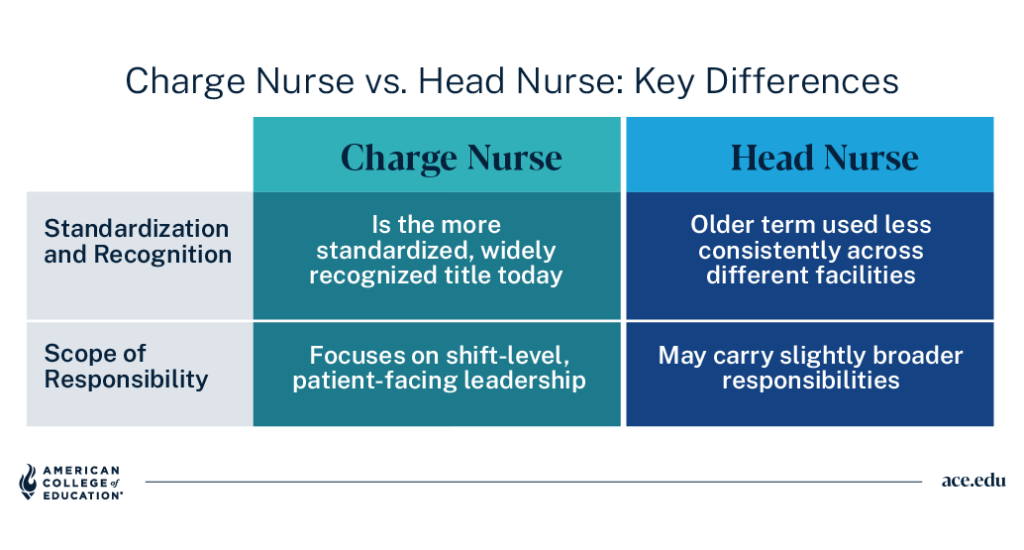
When comparing a charge nurse vs. head nurse, one challenge is that “head nurse” does not have a standardized definition across the healthcare industry. It is an older or sometimes informal title that healthcare facilities may use differently. Today, the term may be used interchangeably with either charge nurse or nurse manager, depending on the employer and scope of the position.
Smaller healthcare facilities or organizations that use more traditional job titles may still refer to a unit-level nursing leader as a head nurse. In one setting, that person might oversee nurse staff and patient care during a shift, making the position similar to a charge nurse. Elsewhere, a head nurse might have ongoing responsibility for staffing, scheduling and unit operations, placing the role closer to that of a nurse manager.
Because the title varies, job seekers should focus on the responsibilities, authority and reporting structure listed for a head nurse position rather than assuming the title represents a specific level of nursing leadership.
What Is a Nurse Manager?
A nurse manager is a nursing leader responsible for overseeing the broader operations and performance of a nursing unit, department or team. Unlike a charge nurse, whose leadership is generally concentrated on day-to-day or shift-level clinical operations, a nurse manager typically has greater administrative and organizational responsibility. Their duties may include:
- Recruiting, training and evaluating nursing staff
- Developing schedules and managing staffing needs
- Supporting organizational policies and regulatory compliance
- Managing or contributing to budgets
- Monitoring patient care and quality standards
- Supporting professional development among nursing staff
Nurse managers typically balance their nursing knowledge with skills in administration, communication, decision-making and people management. They may spend less time providing direct patient care because their focus extends to the long-term success of the entire unit.
Head Nurse vs. Nurse Manager: How Are They Related?
The head nurse vs. nurse manager comparison depends largely on how a healthcare facility defines the head nurse position. When “head nurse” refers to someone with broader administrative responsibility for a unit or department, the role may closely resemble that of a nurse manager. Both may oversee nursing staff, contribute to scheduling, support organizational policies and help maintain standards for patient care.
The key distinction is scope. A head nurse who primarily oversees nurses and patient care on a unit or shift functions more like a charge nurse. A nurse manager generally has ongoing, department-level authority that can include staffing, budgeting, performance management and long-term planning. Because head nurse duties vary, the specific job description is the best way to determine how closely the position aligns with nurse management.
Charge Nurse vs. Head Nurse: Key Differences
A charge nurse vs. head nurse comparison can be particularly tricky because the two titles may describe similar responsibilities in some healthcare settings. Both can involve patient-facing leadership, coordinating nurse staff, addressing concerns and helping a unit run smoothly during a shift.
The biggest difference is consistency. “Charge nurse” is a more widely recognized title for a nurse who provides shift-level clinical leadership, while “head nurse” is used less consistently. Depending on the facility, a head nurse may have responsibilities similar to a charge nurse or broader authority that extends beyond an individual shift.
For nurses exploring either position, the title alone may not tell the full story. Asking about supervisory authority, scheduling, staffing, patient care and administrative responsibilities during the hiring process can provide a clearer understanding of what the job actually involves.
Charge Nurse vs. Nurse Manager: Similarities and Differences
The charge nurse vs. nurse manager comparison shows how nursing leadership can look different depending on the scope of the position. Although both roles help guide nursing teams and support quality patient care, charge nurses tend to focus on immediate clinical needs, while nurse managers take responsibility for broader administrative and operational priorities.
How the Roles Are Similar
Charge nurses and nurse managers are both nurse leaders who rely on clinical expertise to understand the needs of patients and nursing staff. Strong communication, decision-making, problem-solving and leadership skills are important in both positions, particularly when coordinating teams and responding to challenges.
Both leadership positions also involve advocating for patients and staff. Whether addressing an immediate patient care concern or identifying ways to improve working conditions and processes, these nurses help connect the needs of a nursing team with the goals of the healthcare organization.
How the Roles Differ
The biggest difference is the scope of oversight. A charge nurse typically coordinates nurses and patient care within a particular unit during an assigned shift. Nurse managers typically have ongoing responsibility for a department or unit across multiple shifts and, depending on the organization, may oversee multiple units.
Their daily responsibilities reflect that difference. Charge nurses remain closer to bedside care, handling real-time concerns such as patient assignments, changes in care needs and staffing challenges. They may also provide direct patient care when needed.
Nurse managers focus more heavily on administrative operations. Nurse manager responsibilities can include hiring and evaluating employees, developing schedules, managing budgets, implementing policies, and monitoring the long-term performance of a unit. While both roles require an understanding of clinical care, a nurse manager generally spends less time providing hands-on patient care than a charge nurse.

Education and Experience Requirements
Education and experience requirements commonly increase as nurses take on greater leadership responsibilities. A charge nurse typically needs to be a licensed registered nurse with an ADN or BSN and several years of clinical experience. Requirements vary by employer, but additional clinical experience can help nurses develop the judgment and leadership skills needed to oversee a shift.
Nurse manager positions typically have higher expectations for nursing education. Employers may require a BSN and often prefer an MSN, along with several years of clinical and leadership experience. Nurses who begin with an associate degree in nursing can continue their education through a bachelor’s or master’s degree in nursing as their career goals evolve.
Other advanced nursing credentials, including those held by a nurse practitioner, can demonstrate extensive clinical education and experience. However, advanced practice and nursing management are distinct career paths, and becoming a nurse practitioner is seldom required to become a nurse manager.
Career Outlook for Nursing Leadership Roles
Nursing leadership can provide opportunities for long-term career growth as nurses gain experience and take on greater responsibility. According to the Bureau of Labor Statistics (BLS), employment of registered nurses is projected to grow 5% from 2024 to 2034.1 Charge nurse and head nurse positions can represent advancement opportunities within registered nursing.
For nurse managers, the BLS category of medical and health services managers provides relevant career context. Employment in this broader category is projected to grow 23% from 2024 to 2034,2 much faster than the average for all occupations. Nurse managers typically combine their clinical backgrounds with leadership and administrative responsibilities as healthcare organizations work to coordinate staff, services and patient care.
Both pathways can offer opportunities for nurses who want to develop their leadership experience, whether they prefer to remain close to bedside care or move toward healthcare administration.
Choosing the Right Nursing Leadership Path for You
Choosing among nursing leadership positions starts with considering what you want your work to look like. Nursing offers many different roles and specialties, and leadership is just one direction your career can take.
If you are more interested in staffing, budgeting, policy and long-term unit performance, nurse management may better align with your goals. This path may also require additional nursing education, including earning a BSN or pursuing an MSN.
Think beyond your next position, too. Nurses interested in eventually pursuing director-level positions, executive leadership or roles such as chief nursing officer may benefit from gaining management experience and continuing their education. Your preferred balance of clinical and administrative work can help determine which path makes the most sense for you.
Understanding Nursing Leadership Titles
Charge nurse, head nurse and nurse manager may sometimes be used interchangeably in casual conversation, but the positions can carry different responsibilities, levels of authority and education expectations. Charge nurses generally provide shift-level clinical leadership, while nurse managers focus more heavily on ongoing unit administration. The title, “head nurse,” can describe responsibilities closer to either role depending on the healthcare facility.
Because nursing titles are not always used consistently, reviewing the actual duties and qualifications of a position is more reliable than relying on its title alone. Understanding who the role supervises, how much patient interaction it involves and what administrative authority it carries can help you make a more informed career decision.
Nursing offers leadership opportunities at many stages of a career. As your experience, interests and education develop, you can pursue the path that allows you to make the kind of impact you want on patients, colleagues and healthcare organizations.
FAQs
Can a charge nurse become a nurse manager without going back to school?
Requirements vary by employer, and an experienced charge nurse who already meets the education requirements for a nurse manager position may be able to advance without earning another degree. However, some employers prefer or require a BSN or MSN for management positions. Reviewing job requirements in your area can help you determine whether additional education may support your goals.
Do all healthcare facilities use the same titles for these leadership roles?
No. Nursing leadership titles and responsibilities can vary between healthcare organizations. “Head nurse,” in particular, may describe a position similar to either a charge nurse or nurse manager. Job seekers should review the responsibilities, authority and qualifications listed in each job description rather than relying on the title alone.
Is a charge nurse considered a supervisor in a formal sense?
It depends on the employer. A charge nurse may supervise clinical workflows, delegate responsibilities and guide nursing staff during a shift without having the formal administrative authority associated with a nurse manager. Healthcare organizations establish their own reporting structures and supervisory responsibilities, so the scope of the position can vary.
What soft skills matter most for success in nursing leadership roles?
Communication, critical thinking, organization, adaptability, conflict resolution and emotional intelligence can all help nurses succeed as leaders. Effective nurse leaders must communicate with different healthcare professionals, support their teams and make thoughtful decisions, sometimes in fast-moving clinical environments.
Take Your Next Step Toward Nursing Leadership
Whether you see yourself leading a shift, managing a nursing unit or eventually pursuing an executive leadership position, building your career starts with the right experience and education. The nursing path you choose can evolve as your interests, skills and goals grow.
American College of Education (ACE) offers affordable nursing programs designed to help working nurses continue their education while preparing for what comes next. Whether you’re ready to advance from an RN with an RN to BSN program or pursue graduate nursing education through ACE’s BSN to MSN or RN to MSN programs, you can find a pathway that supports your professional goals.
1Bureau of Labor Statistics: Registered Nurses. Accessed Aug. 21, 2026.
2Bureau of Labor Statistics: Medical and Health Services Managers. Accessed Aug. 21, 2026.