

All registered nurses (RNs) need an active nursing license to practice, but many choose to build upon that foundation by earning a specialty certification. Unlike licensure, which confirms a nurse meets the requirements to practice, certification is a voluntary credential that recognizes advanced knowledge in a specific area of nursing. It shows a commitment to continued learning while helping nurses stand out in an increasingly specialized profession.
The benefits of nursing certifications can extend throughout your career. It can also strengthen your clinical expertise and increase your credibility with employers and peers, which can position you for leadership and specialized roles that may offer higher pay.
Not every certification serves the same purpose. Understanding your options can help you choose a credential that aligns with your interests and where you want your nursing career to go.
What Are Nursing Certifications?
Nursing certifications are professional credentials that show a nurse has met specific standards in an area of practice beyond basic RN licensure. While a nursing license authorizes a nurse to practice, certification demonstrates advanced knowledge, skills and expertise in a particular specialty.
Most nursing certifications are awarded by professional certifying organizations after candidates meet their eligibility requirements. These often include holding an active nursing license, gaining a minimum amount of clinical experience, and passing one or more certification exams. Depending on the specialty, nurses may also need to complete additional coursework or continuing education before becoming eligible to apply.
For a practicing nurse, certification is one way to demonstrate a commitment to continued learning and high-quality patient care. It shows a willingness to build on existing knowledge, stay current with changes in the profession and develop expertise in a chosen specialty.
Certification isn’t permanent, however. Most certifying organizations require nurses to renew their credentials every few years through continuing education, clinical practice hours or, in some cases, retaking qualification exams. These renewal requirements help ensure certified nurses stay current with evolving best practices, research and standards of care.
Types of Nursing Certifications
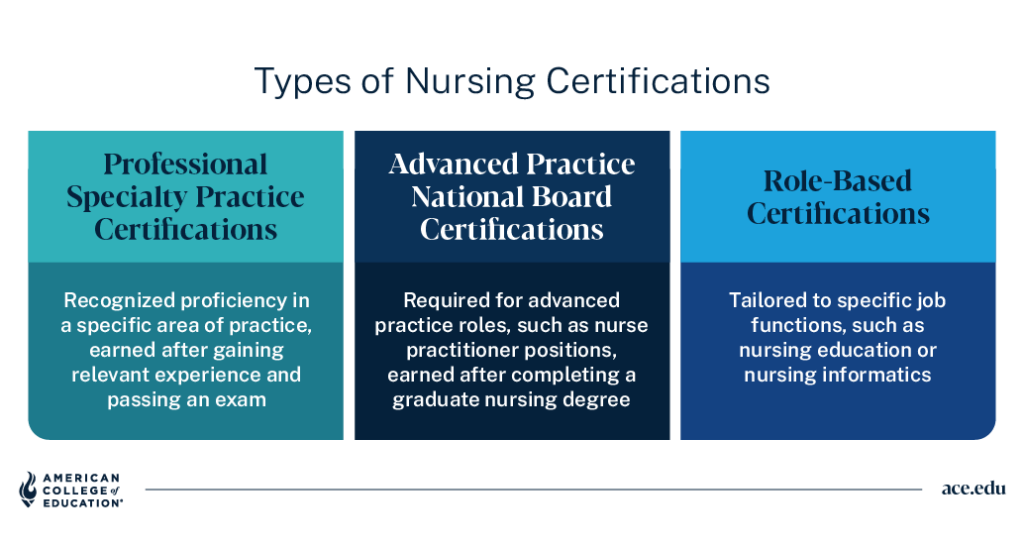
Not all nursing certifications serve the same purpose. Some recognize expertise in a clinical specialty, while others support advanced practice or nonclinical roles.
Professional Specialty Practice Certifications
Specialty certifications build on real-world clinical experience. Nurses typically become eligible after working in a specific area of practice and meeting the requirements to sit for a certification exam.
Common examples of nursing include emergency, pediatric, oncology or critical care. These certifications demonstrate advanced knowledge and skills in clinical nursing while recognizing a nurse’s experience within a particular specialty.
Advanced Practice National Board Certifications
A national board certification is typically part of the process to become an advanced practice registered nurse (APRN). These credentials are required for roles such as nurse practitioner, certified nurse-midwife, certified registered nurse anesthetist and clinical nurse specialist.
Unlike many certifications available to registered nurses, advanced practice certifications build on graduate-level education. Nurses generally become eligible to sit for a national board certification exam after completing a master’s or doctoral nursing degree.
Role-Based Certifications
Some credentials support roles in education, leadership, informatics, case management and other areas outside a clinical specialty.
Nurse educators may pursue certifications that demonstrate expertise in teaching and curriculum development, while nurses in informatics, leadership, case management or quality improvement can earn credentials specific to those roles. These certifications can help prepare nurses for positions that focus on education, operations, technology or organizational leadership rather than direct patient care.
Post-Graduate Certificate Programs
A professional certification is awarded by a certifying organization after a nurse meets eligibility requirements and passes a certification exam. A post-graduate certificate program, on the other hand, is an academic program offered by a college or university that provides focused education in a specialized area.
Certificate programs don’t replace professional certification, but they can help nurses build specialized knowledge, prepare for certification exams or develop the skills needed for advanced roles.
Why Become a Certified Nurse?
Certification can support your career in several ways, from strengthening your clinical expertise to preparing you for leadership and specialized roles.
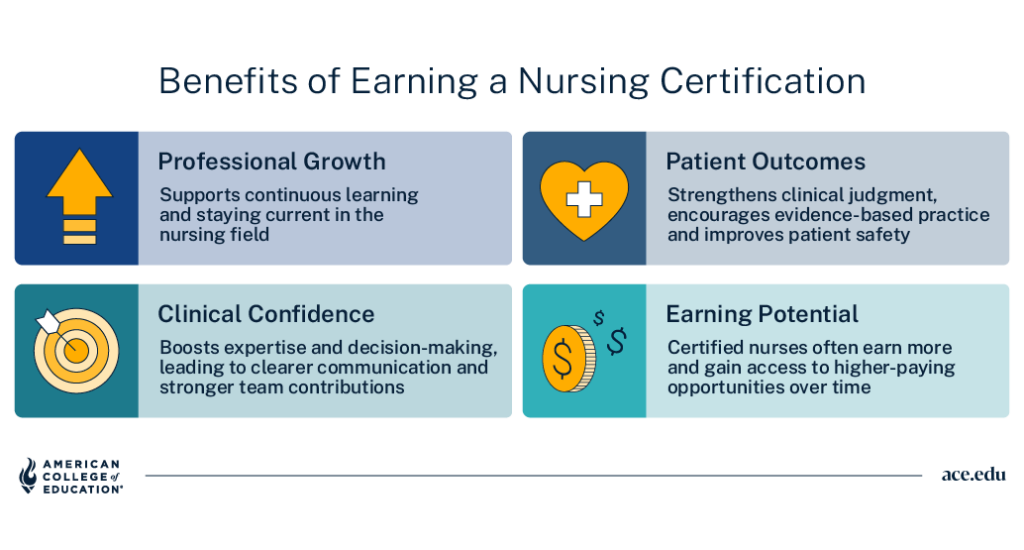
Supporting Professional Growth
Nursing is constantly evolving, making continued learning an important part of professional practice. Pursuing nursing certification gives nurses an opportunity to deepen their expertise, stay current with evidence-based practice and build confidence in their specialty.
It also supports professional growth by expanding specialized knowledge and preparing nurses for leadership opportunities, advanced responsibilities and new career paths.
Improving Patient Outcomes and Quality of Care
As nurses prepare for certification, they build on the knowledge and skills they use every day. Reviewing current clinical guidelines, research and evidence-based practices can strengthen clinical judgment and support confident decision-making when caring for patients.
Research has also found a connection between higher rates of certified nurses and improved patient outcomes, including better patient safety measures in some healthcare settings. While certification is only one factor, it reflects a commitment to staying current and providing high-quality care.
Building Confidence in Clinical Practice
Preparing for a certification exam can build confidence. As nurses review what they’ve learned through education and clinical experience, they reinforce the knowledge and decision-making skills they rely on in practice.
That confidence can make a difference on the job. Nurses may feel more prepared to communicate with physicians, collaborate with interdisciplinary care teams and step into leadership opportunities.
Increasing Earning Potential
Although certification doesn’t automatically result in higher pay, it can improve long-term earning potential.
Some healthcare employers offer certification bonuses, salary differentials or reimbursement for certification expenses. In competitive job markets, certification may also help nurses stand out when applying for promotions or specialized roles with higher salaries.
What Are the Opportunities for Advancement in Nursing?
Certification can help nurses qualify for new opportunities throughout their careers. Depending on the specialty, it may open the door to leadership roles, positions in specialized units or expanded clinical responsibilities. It can also strengthen a nurse’s qualifications for promotions into supervisory positions, including roles as nurse managers, educators or clinical leaders.
Many nationally recognized certifications are awarded by organizations such as the American Nurses Credentialing Center (ANCC). This recognition makes it easier for nurses to pursue opportunities with new employers or in different locations.
Certification can also benefit the healthcare organizations where nurses work. Hospitals pursuing Magnet Recognition often value a highly certified nursing workforce because it reflects a commitment to professional development and nursing excellence.
How to Choose the Right Nursing Certification
Choosing the right certification starts with thinking about where you are in your career and where you want to go next.
For many nurses, the best place to start is with a certification that aligns with your current specialty. Building on the knowledge and experience you already use in practice can make the certification process more manageable while strengthening your expertise in that area.
You should also consider your long-term career goals. If you’re interested in moving into leadership, education or advanced practice, look for certifications that support that path. If graduate school is part of your plan, think about how a certification complements your chosen nursing program and your broader professional goals.
It’s also important to research employer expectations. Some healthcare organizations require or prefer specific certifications for specialized departments or leadership positions. Others offer support such as exam reimbursement, continuing education assistance or salary differentials for earning certifications.
There’s no single “best” certification for every nurse. Comparing your options and considering your specialty, career goals and employer expectations can help you choose a credential that’s a good fit for where you are now and where you hope to go next.
Steps for Earning a Nursing Certification
While eligibility requirements vary by location and specialty, most nursing certifications follow a similar process.
- Review the eligibility requirements, which often include an active nursing license and a minimum amount of clinical experience in the specialty
- Complete any required preparatory coursework, specialty training or exam preparation
- Submit your application and any required documentation to the certifying organization
- Schedule and pass the certification exam
- Maintain your certification through periodic renewal, based on requirements established by the certifying organization
Advancing Your Nursing Career With ACE
As your nursing career grows, so do your professional development options. While certification can help you deepen your expertise in a specialty, advancing your education can prepare you for opportunities that require broader leadership, administrative or teaching skills.
For nurses interested in leadership, education or advanced practice, graduate education can build on the knowledge and experience you’ve already developed in the field. At American College of Education (ACE), nursing programs are designed to help working RNs continue their education while preparing for the next stage of their careers. Coursework is completed online, with required practicum experiences completable locally where applicable.
Whether you’re preparing for a leadership role, planning to teach future nurses or working toward advanced practice, continuing your education can complement the specialty expertise you’ve gained through certification and help you take the next step in your career.
FAQs
Are nursing certifications required to work as a registered nurse?
No. RNs must hold an active nursing license to practice, but most specialty certifications are almost always voluntary. Nurses typically pursue certification to demonstrate expertise in a particular specialty, strengthen professional credibility and support career advancement.
How long does a typical nursing certification remain valid before renewal?
Most nursing certifications remain valid for three to five years, although the renewal period varies by certifying organization. In many cases, nurses must meet renewal criteria to keep their certification active.
Can a nurse hold more than one specialty certification at a time?
Yes, nurses can hold more than one specialty certification at the same time. Some earn additional certifications as they gain experience in new specialties or take on different roles throughout their careers. Each certification has its own eligibility requirements, renewal schedule and continuing education requirements.
Do all employers recognize the same nursing certifications equally?
Not always. While many nationally recognized nursing certifications are widely respected, employers may prefer or require specific credentials depending on the role, specialty or healthcare organization. Before pursuing a certification, it’s a good idea to review job postings or employer requirements to see which credentials are most relevant to the positions you’re interested in.
Explore ACE’s affordable nursing programs to see where we can take your career.